

River Rock by the Yard: How to Choose, Calculate, and Order for Your Landscape
River rock by the yard is bulk, naturally rounded stone sold in cubic yard increments for landscaping projects. Homeowners and contractors across Central Indiana buy it this way because purchasing river rock by the yard is a cost-effective way to handle large landscaping projects; buying in bulk lowers the per-cubic-foot cost compared to bagged stone from a box store, and it eliminates the environmental footprint of disposing of dozens of plastic bags.
McCarty Mulch & Stone sells river rock and pea gravel by the cubic yard and by the ton, with online ordering and delivery across Central Indiana. Bulk river rock is sold by weight or cubic yard, and it is available for pickup and delivery from our supply yard. The most common uses include decorative ground cover for flower beds, drainage channels, dry creek beds, areas around pools and ponds, tree rings, walkways, and low-maintenance beds that replace annual mulch. River rock has low maintenance requirements compared to organic mulch, making it a favorite for homeowners who want a permanent ground cover.
The rest of this article walks through how to pick the right size and color of river rock, calculate how many yards you need, and schedule delivery. Customers can typically expect same-week delivery during peak season (spring through fall 2027) within the Greater Indianapolis area, subject to availability.
Table of Contents
- River Rock by the Yard: Quick Overview & Why It Matters
- Choosing the Right River Rock Size and Style
- How Many Yards of River Rock Do You Need?
- Ordering, Delivery & Installation Tips in Central Indiana
- FAQs About River Rock and Pea Gravel
- Why Choose McCarty Mulch & Stone for River Rock by the Yard
- Call to Get a River Rock Quote Today
Choosing the Right River Rock Size and Style
Not all river rock is the same. River rock sizes range from 1/8″ to 12″, and the size, color, and texture you pick affect both the look and performance of your landscaping designs. A stone that works well in a drainage swale can look out of place in a tidy front bed, and a stone that feels good underfoot near a pool may wash away in a steep channel.
Sizes McCarty Mulch & Stone carries by the yard
Here is what you can expect to find at our Central Indiana yard:
| Product | Size Range | Best Uses |
|---|---|---|
| Pea gravel | About 3/8″ | Pathways, play areas, fire pit surrounds, top dressing between stepping stones |
| #8 Small River Rock | Around 1″ | Landscape beds, walkways, tree rings, borders |
| #5 Large River Rock | 1″–3″ | Beds, swales, around trees, general ground cover |
| Jumbo River Mix | 3″–5″+ | Drainage swales, dry creek beds, erosion control | Beyond these core products, the broader industry classifies river rock into small (2″ to 5″), medium (4″ to 7″), and large (6″ to 12″). Cobble stones range from 3″ to 12″ in size, and rubble stones are sized between 4″ and 12″. Polished pebbles range from 1/2″ to 2″ in size and are commonly used in decorative planters and water features. Mexican beach pebbles are popular decorative rocks for modern, minimalist designs. Landscape boulders range from 15″ to 30″ in size and serve as accent pieces or retaining elements rather than ground cover.
River rock vs. pea gravel: when to use each
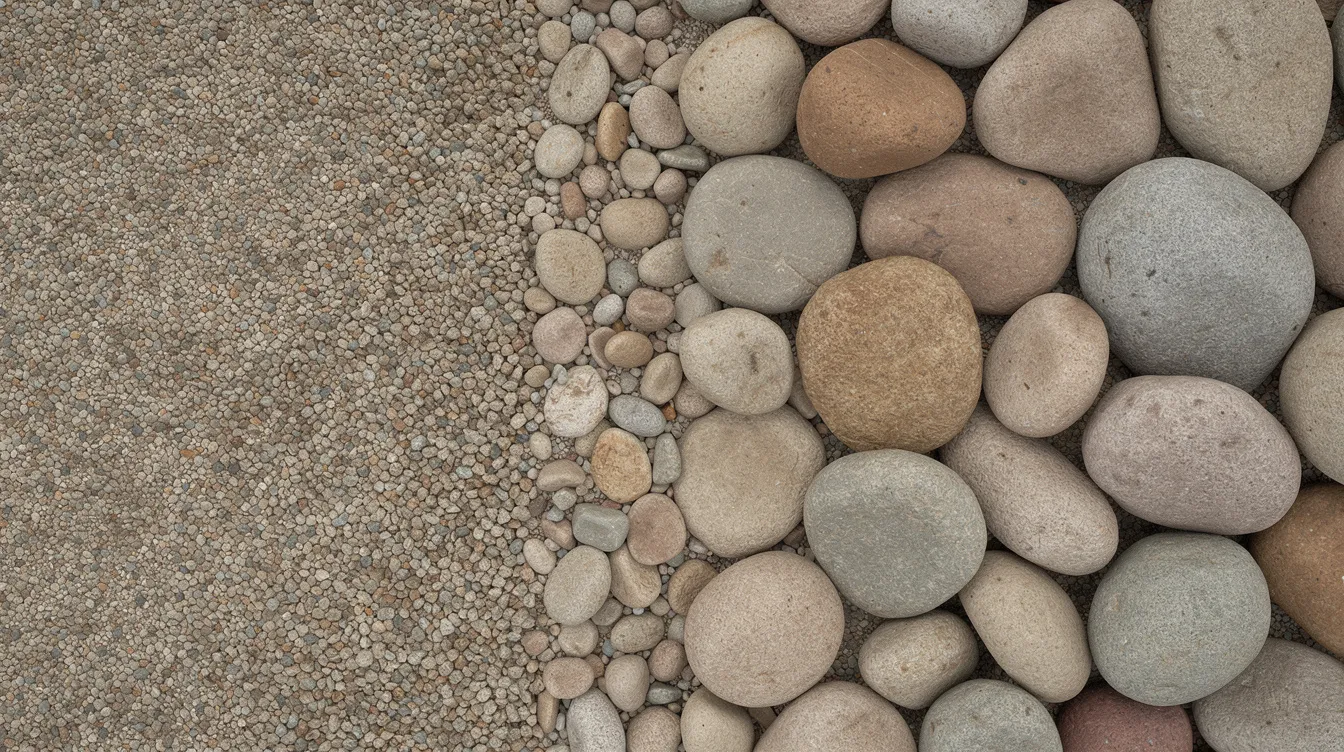
Use pea gravel where foot traffic comfort is the priority. Its small, smooth nature makes it gentle on bare feet. It works well in play spaces, around patios, and as fill between stepping stones. Smooth river rock is also gentle on bare feet and is pet-friendly, but the larger sizes offer more weight and stability.
Choose rounded river rock where you want a natural streambed look, heavier stones that stay in place on slopes, and a more substantial decorative finish. River rock is versatile for various landscaping applications including flower beds, walkways, driveways, edges of ponds, and even creating waterfalls in backyard water features.
Color and style options
McCarty typically stocks earth-tone brown river rock, mixed gray river rock, and premium decorative stone blends such as meramac (caramel to rust tones) and ebony blends. Pricing reflects the material: pea gravel runs about $52 per cubic yard, standard river rock products are $68 per cubic yard, and premium blends like ebony can reach $225 per cubic yard.
Practical color guidance for Central Indiana homes:
- Brown and rust tones complement brick exteriors and natural wood, which are common in neighborhoods across Fishers, Carmel, and Noblesville.
- Mixed gray stone pairs well with modern siding, concrete hardscapes, and steel accents popular in newer Zionsville and Westfield developments.
- Dark stone (ebony blends) hides leaf debris and adds contrast, but absorbs heat in full sun. Consider this for shaded beds rather than around patios where bare feet touch stone.
- Lighter stone (whites, tans) brightens shady areas and foundation plantings on the north side of a house.
Bulk decorative river rocks can enhance landscape aesthetics, and a single bulk load ensures uniform color tones and sizing across your entire project. We encourage customers to visit the yard in person to see actual river rock samples before ordering, since natural stone color can vary between photos and reality.
How Many Yards of River Rock Do You Need?
A cubic yard measures 3 feet by 3 feet by 3 feet, which equals 27 cubic feet of material. Most river rock at McCarty Mulch & Stone is sold either by the yard or by the ton, with coverage conversions provided to simplify planning.
Coverage rules of thumb
One cubic yard of river rock typically covers 100 to 160 square feet at a depth of 2 to 3 inches, depending on stone size:
| Depth | Coverage per Cubic Yard | Best For |
|---|---|---|
| 2 inches | ~160 sq ft | Pea gravel and small stone in decorative beds |
| 3 inches | ~110 sq ft | Medium river rock in most landscape beds |
| 3–4 inches | ~80–100 sq ft | Large river rock (3″–5″) in drainage and creek beds |
| Standard landscape depth for river rock is typically between 2 to 4 inches. For most decorative river rock beds in Indiana, 3 inches is the recommended depth. At that thickness, soil stays hidden, weeds have a harder time pushing through the stone layer, and the rock is less likely to shift during heavy rain. |
Three-step calculation example
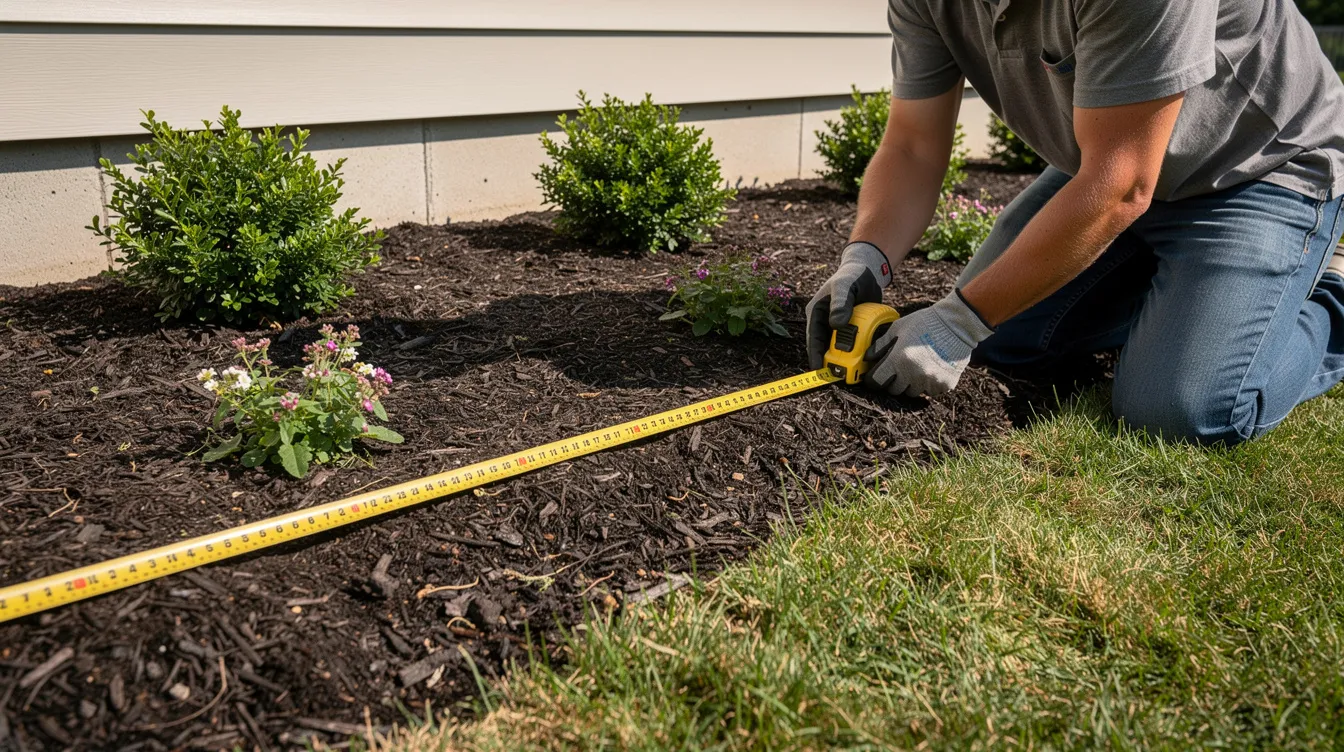
Step 1: Measure your area. A homeowner in Carmel has a 40-foot by 6-foot landscape bed along the side of their house.
Step 2: Multiply length by width. 40 × 6 = 240 square feet.
Step 3: Divide by coverage per yard at your chosen depth. At 3-inch depth with medium river rock: 240 ÷ 110 ≈ 2.2 cubic yards. Round up and add extra for settling: order 2.5 to 3 cubic yards.
Adding 10% to 15% extra material accounts for settling and uneven ground. Ordering a little over your calculated quantity prevents a second delivery trip and the frustration of thin spots showing soil through the stone.
Converting yards to tons
Natural river stone weighs about 2,700 pounds per cubic yard. That means 1 cubic yard of river rock equals approximately 1.3 tons depending on the rock size. Smaller stone packs tighter and weighs more per yard; larger stone leaves more air gaps and weighs slightly less.
Some contractors prefer ordering by the ton. As a rough guide, 1 ton of river rock covers 25 to 35 square feet, depending on depth and stone size. One ton of river rock often equals roughly 0.6 to 0.75 cubic yards. McCarty’s staff can translate yards to tons on quotes and invoices; just provide your measurements and preferred stone, and we handle the conversion.
Moisture, compaction, and stone size can all shift coverage slightly. If you are unsure about the quantity you need, call or message us with your measurements and we will double-check the yardage estimate before you place your order.
Ordering, Delivery & Installation Tips in Central Indiana
McCarty Mulch & Stone handles bulk river rock and pea gravel orders through online ordering, phone orders, and in-yard pickup, supported by a dedicated mulch and stone delivery fleet across Central Indiana. Whether you are a homeowner buying two yards for a front bed or a contractor filling a subdivision drainage plan, the process is straightforward.
How ordering works
- Choose your material. River rock or pea gravel; pick the size (small, large, jumbo) and color.
- Decide quantity in yards. Use the calculation method above or ask our staff to verify.
- Select a delivery date and time window based on current 2027 schedules.
- Provide a delivery address in Central Indiana: Indianapolis, Fishers, Noblesville, Greenwood, Zionsville, Avon, Plainfield, Westfield, Carmel, and surrounding communities.
Delivery services are offered for bulk landscaping materials across the Greater Indianapolis area, including dedicated mulch and stone delivery in Brownsburg. Delivery fees vary by distance and load size, and customers can see pricing instantly during online checkout or call the office for a quote.
Delivery logistics
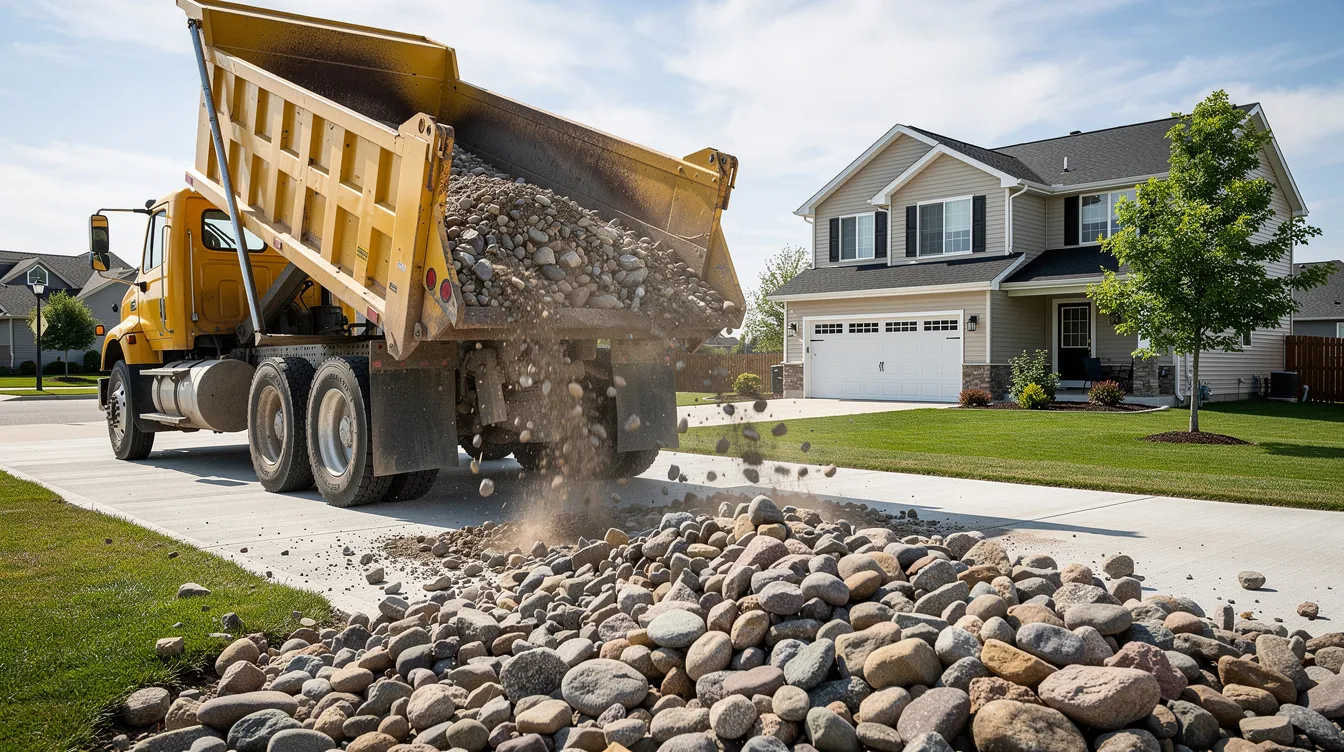
River rock is delivered loose by dump truck and placed in a designated spot on a driveway or other hard surface. Typical delivery trucks carry 8 to 15 cubic yards, though weight limits can reduce capacity for heavier stone products. Before your delivery:
- Mark the exact dump location with a cone, flag, or spray paint.
- Move all vehicles, trash cans, and toys out of the driveway.
- Check for low-hanging tree branches or overhead wires along the truck’s path.
Installation tips for a lasting result
River rock is durable and offers resistance to severe weather conditions, but proper installation makes the difference between a bed that looks great for a decade and one that needs rework in a year.
- Landscape fabric first. Lay heavy-duty landscape fabric under river rock to minimize weeds while still allowing drainage. River rocks allow water to flow freely through the gaps, making them ideal for drainage solutions; the fabric prevents stones from sinking into Indiana’s clay soil.
- Edge it. Steel edging, concrete curbing, or paver edging keeps stone from spilling into grass, sidewalks, or driveways. Without a barrier along the edges, stones migrate with every mowing.
- Rake evenly. After spreading the layer of stone, rake it level. Plan for some settling over the first few weeks, and do a light touch-up raking after heavy rains.
River rock suppresses weeds and retains soil moisture when used as a ground cover, which reduces watering needs for nearby plantings.
Special use cases
Drainage swales and downspout extensions: Use larger river rock (3″–5″) placed over a fabric or aggregate base. River rock can help prevent soil erosion and puddling due to its superior drainage capabilities. For slopes, river rock can be used for erosion control during heavy rain, keeping soil in place where water concentrates.
Around pools and patios: Choose smoother, smaller river rocks or pea gravel. These are comfortable under bare feet and less likely to damage pool liners. Avoid angular gravel near barefoot areas.
Creating dry creek beds: Combine jumbo river rock with medium stone to mimic the look of a natural streambed. Grade the channel so water moves away from structures and toward a safe outlet.
Maintenance expectations
River rock does not decompose, so it does not need the annual replacement that mulch demands. Occasional top-offs every two to three years address areas where stone has settled or shifted. Debris and leaves can be blown off with a leaf blower or lightly raked. In fall, this is especially relevant across tree-heavy neighborhoods like Meridian-Kessler, Broad Ripple, and the older parts of Irvington.
FAQs About River Rock and Pea Gravel
How much area does a yard of river rock cover?
One cubic yard of river rock covers roughly 160 square feet at 2-inch depth and about 110 square feet at 3-inch depth. Larger stone (3″–5″) covers less per yard because the stones leave bigger air gaps and require more depth.
For a common Indianapolis scenario: a 20-foot by 10-foot backyard bed (200 square feet) at 3-inch depth needs approximately 200 ÷ 110 = 1.8 cubic yards. With extra material for settling, order 2 yards.
What size river rock is best for landscape beds?
For most flower beds and foundation plantings in Central Indiana, 1″ to 2″ river rock strikes the right balance of comfort, stability, and appearance. It is heavy enough to stay put in wind and rain, small enough to rake smooth, and provides full soil coverage at 3-inch depth.
Pea gravel is a better fit for casual pathways and play areas where a softer, finer texture underfoot matters. Large river rock (3″–5″ or more) is the right choice for high-flow drainage channels and dry creek features where weight and size prevent washout.
Can I put river rock directly over old mulch?
Removing most old mulch before adding river rock produces the best result. Level the soil, then install quality landscape fabric before spreading river rocks. A thin layer of decomposed mulch left in place adds organic matter to the soil and will not cause problems, but thick layers of undecomposed mulch create an unstable base. Over time, this causes uneven settling and can allow the stone to sink in spots, leaving thin patches.
Is river rock good for drainage around my house?
River rock is commonly used along foundations and under downspouts in the Indianapolis area to move water away from structures. Paired with proper grading, it channels runoff and reduces soil erosion. For drainage channels, use 2″ to 4″ river rock. For French drains, smaller gravel or pea gravel paired with perforated pipe works well, and homeowners often weigh whether to mulch, use stone, or river rock around the house based on drainage and maintenance needs.
If you have standing water problems near your foundation or persistent puddling in your yard, consult a contractor or McCarty’s staff to determine whether grading, drain tile, or a combination of solutions with river rock is the right approach.
What is the difference between river rock and pea gravel?
Pea gravel is smaller (about 3/8″) and often more uniform in size, with a mix of colors in each load. River rock comes in a range of larger sizes with a more natural, rounded, polished appearance shaped by water or glacial action.
The practical differences matter: pea gravel shifts more underfoot and is perfect for casual paths, play areas, and as fines fill between pavers. Heavier river rocks stay in place better on slopes and in high-flow drainage areas. Both are good options for weed suppression and moisture retention; the choice depends on application and style preference.
Do you offer delivery of river rock by the yard in my area?
McCarty Mulch & Stone delivers bulk river rock and pea gravel throughout Central Indiana, including Indianapolis, Carmel, Fishers, Noblesville, Westfield, Greenwood, Zionsville, Avon, Plainfield, Martinsville, and nearby communities with dedicated mulch and stone delivery in Martinsville. Delivery fees vary by distance and load size. You can see pricing during online checkout or call the office for a quote. During peak spring and summer months, scheduling delivery a few days ahead helps secure your preferred date and time window.
Why Choose McCarty Mulch & Stone for River Rock by the Yard
McCarty Mulch & Stone has been a trusted landscape supply partner in Central Indiana for years, serving both homeowners and landscape contractors with bulk stone and mulch products including soil and compost.
Here is what sets us apart:
- Large in-stock selection. We carry river rock, pea gravel, decorative stone blends, soils, and mulches at our Central Indiana yard, so you can compare products side by side before you order.
- Reliable bulk delivery. Experienced drivers who know neighborhood layouts, tight driveways, and HOA-restricted access points across Fishers, Carmel, Zionsville, and beyond, with dedicated mulch and stone delivery services in Danville.
- Volume discounts and contractor pricing. Recurring orders and large commercial projects qualify for consistent bulk pricing. Set up a contractor account for streamlined ordering and invoicing.
- Knowledgeable staff. Our team can help you calculate yards from your measurements, recommend the right stone size for your project, and coordinate mixed loads of mulch and rock on the same delivery.
Our 2027 online ordering system lets you browse products, compare river rock and pea gravel options, see current pricing per yard, and schedule delivery from your phone or laptop without a phone call. And because we work with Central Indiana’s clay soils, freeze-thaw cycles, and neighborhood HOA expectations daily, we help customers choose materials that hold up season after season, whether they’re ordering decorative gravel or natural stone for patios and walls.
Call to Get a River Rock Quote Today
Ready to get started? Here is what to do:
- Measure your beds and drainage areas. Length times width gives you square footage.
- Pick your stone. Use the size and color guidance above, or visit our yard to see samples.
- Contact us. Call, request a quote online, or stop by the supply yard to confirm the right material and quantity.
- Schedule delivery ahead of peak weekends in spring and early summer 2027 to lock in your preferred date.
Landscape contractors and property managers: set up or use existing accounts for streamlined ordering, job-site delivery, and consistent bulk pricing on river rock, pea gravel, mulch, and soils, including convenient mulch and stone delivery in Pendleton.
Whether you need a single yard for a small front bed or multiple truckloads for a new subdivision, McCarty Mulch & Stone can supply and deliver the right river rock for the job.
