

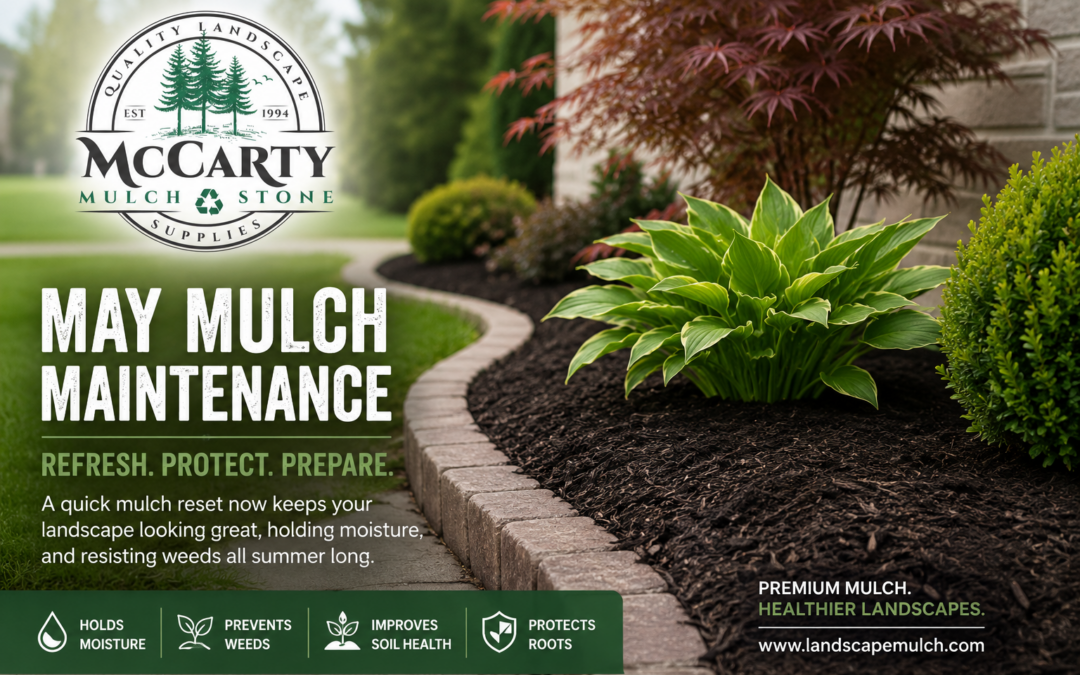
Your Mulch in Late May: Why It’s Already Fading (and How to Fix It Before Summer Hits)
It Looked Great a Few Weeks Ago… What Happened?
You refreshed your mulch in early spring. It looked dark, clean, and made everything pop.
Now it’s May—and somehow it already looks… tired.
The color isn’t as rich. A few thin spots are starting to show. Maybe weeds are sneaking through in places you thought were covered.
Nothing’s “wrong”—this is just what happens when Indiana weather starts doing its thing. Sun exposure increases, rain comes in waves, and your landscape shifts fast.
The good news is this: you don’t need a full redo. You just need to understand what your mulch is doing right now—and how to stay ahead of it.
The Real Reason Mulch Starts Fading in May 🌤️
Mulch beds don’t fail overnight. It slowly loses its edge as conditions change.
Longer days mean more UV exposure, which naturally fades surface color—especially in high-visibility areas like front beds and around driveways. Add in spring rain, and that top layer starts to break down faster than expected.
This is where the difference between natural hardwood mulch and color-enhanced mulch becomes noticeable. Natural mulch fades into a softer, earthy tone, while color-enhanced mulch is designed to hold its look longer—but even that needs occasional attention.
👉 You can explore both options depending on your goals at www.landscapemulch.com
Coverage Breaks Down Before You Notice It
Here’s what most homeowners miss: mulch doesn’t just lose color—it loses structure.
Rain compacts it. Wind shifts it. Water runoff moves it away from edges and slopes. What started as a solid 2–3 inch layer quietly turns into uneven coverage.
And once coverage thins out, two things happen fast:
- Moisture escapes more easily
- Weeds find their opportunity
That’s why May isn’t about replacing mulch—it’s about resetting it.
The Quick Reset That Makes Everything Look New Again 🌿
Instead of starting over, think of May as a “tune-up” month.
Walk your beds and look for the spots that stand out—not just visually, but structurally. Areas near downspouts, edges, and slopes tend to need the most attention.
A light top-off in those areas can bring everything back to life. Even adding ½ to 1 inch of fresh mulch restores both color and function without overdoing it.
This is also a good time to lightly turn or “fluff” compacted mulch so it can breathe again and absorb water more evenly.
Water Matters More Than You Think 💧
Mulch and water work together. When one is off, the other struggles.
In May, inconsistent rain patterns can leave some areas saturated and others dry. Mulch helps regulate that—but only if it’s still doing its job.
If you notice water running off instead of soaking in, your mulch may be too compacted. If soil underneath feels dry, coverage may be too thin.
Fixing both is usually as simple as redistributing mulch and reinforcing weak spots.
Color Isn’t Just About Looks
Most people think mulch color is purely aesthetic—but it actually tells you something.
When mulch fades quickly, it’s often a sign of heavy exposure or breakdown. When it stays rich, it’s usually because coverage and moisture levels are balanced.
That’s why color-enhanced mulch is often used in high-visibility areas—it holds its appearance longer while still providing the same protective benefits.
Meanwhile, natural mulch continues to improve soil as it breaks down, making it ideal for garden beds and planting zones.
The Mid-Spring Balance: Don’t Overdo It
One of the biggest mistakes in May is adding too much mulch too quickly.
It’s tempting to pile it on to “fix” fading—but too much mulch can trap moisture, restrict airflow, and stress plants.
The goal isn’t more mulch—it’s even mulch.
Keeping that consistent 2–3 inch depth across your beds does more for your landscape than adding extra in one area and ignoring another.
What a Well-Maintained Mulch Bed Looks Like in May
By mid-to-late May, a healthy mulch bed should still look intentional.
The color should be consistent (not perfect, but even). The edges should be defined. The soil underneath should feel slightly damp—not dry, not soaked.
Most importantly, it should still be doing its job quietly:
Holding moisture
Reducing weeds
Protecting soil
Supporting plant growth
When those things are working, the visual side takes care of itself.
❓ FAQs: May Mulch Maintenance
- Is it normal for mulch to fade this quickly?
Yes—sun and rain accelerate fading in late spring, especially in exposed areas. - Do I need to replace all my mulch in May?
No—most of the time, a light top-off and redistribution is all that’s needed. - How do I know if my mulch is too thin?
If you can see soil easily or weeds are coming up, it likely needs reinforcement. - Does color-enhanced mulch last longer?
Yes—it’s designed to retain color longer than natural mulch. - Can I mix new mulch with old mulch?
Absolutely—this is actually the best way to refresh beds without starting over.
📍 Where We Work
McCarty Mulch & Stone serves homeowners and landscapers across Central Indiana, including:
Greenwood
Indianapolis
Franklin
Whiteland
Bargersville
Center Grove
Southport
Plainfield
Avon
Brownsburg
Greenfield
Shelbyville
And surrounding areas
We offer easy pickup in Greenwood and reliable delivery throughout the region.
🌿 The Goal Isn’t Perfect—It’s Consistent
Your mulch doesn’t need to look brand new all season. It just needs to stay functional and balanced.
A small adjustment in May—before summer heat hits—keeps your landscape looking clean, holding moisture, and resisting weeds when it matters most.
👉 If your beds need a quick refresh, explore options at www.landscapemulch.com
McCarty Mulch & Stone — helping your landscape stay sharp, season after season.
